Jenni AI Review 2026: Why Most AI Writers Fail AdSense Approval (And How Jenni AI Fixes It)
In the rapidly evolving world of Artificial Intelligence, one tool has consistently stayed ahead of the curve for researchers, students, and content creators: Jenni AI. But with so many AI writers flooding the market, does Jenni AI actually deliver on its promise of “human-like” writing, or is it just another wrapper for GPT?
In this deep-dive guide, we will explore everything from its advanced features to its SEO capabilities and why it’s becoming a favorite for those seeking Google AdSense approval.
Also Read: Free vs Paid AI Tools: Which One Is Better for Beginners and Professionals in 2026?
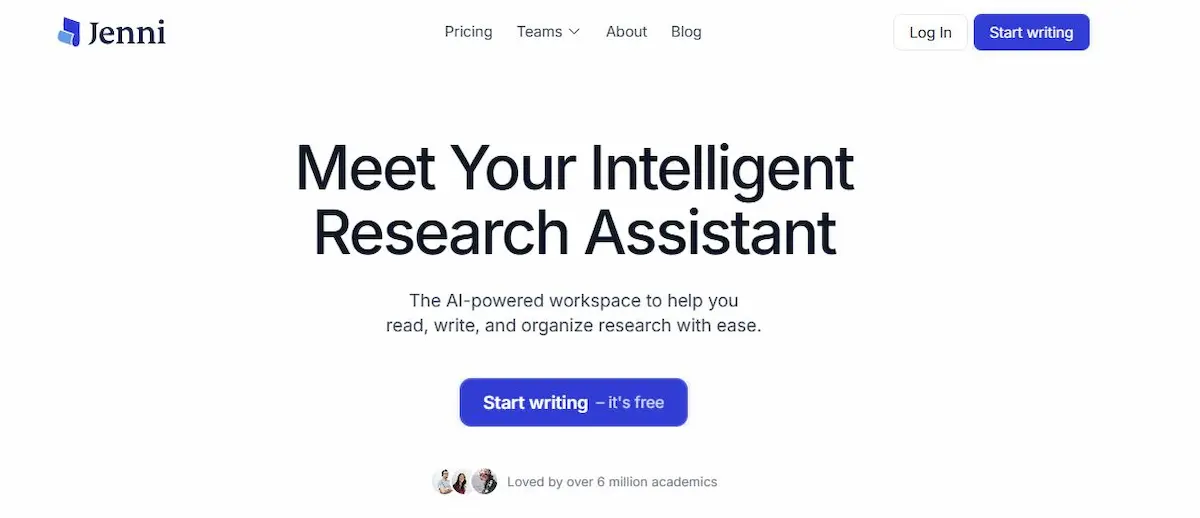
1. What is Jenni AI? (The Evolution of Smart Writing)
In the early days of AI writing, tools were simple “spinners” or “black-box” generators. You gave them a prompt, and they spat out a generic, often repetitive, block of text. Jenni AI represents a paradigm shift in this industry. It isn’t just a basic text generator; it is a sophisticated, specialized writing assistant engineered to function as a digital co-author.
At its core, Jenni AI is built on the philosophy of Augmented Intelligence rather than Artificial Intelligence alone. While most platforms aim to replace the human element, Jenni is designed to bridge the gap between human creativity and machine efficiency. This makes it an invaluable asset for anyone looking to maintain a high standard of quality while increasing their output volume.
The Honest Truth: Pros and Cons of Jenni AI
Every tool has its strengths and weaknesses. To rank on Google, your review must be honest. An “only-positive” review looks like a fake ad. An “honest” review builds trust with your readers and Google’s Quality Raters.
The Pros: Why Professionals Love It
Jenni AI is built for speed without sacrificing quality.
1. Contextual Intelligence: Unlike other tools, Jenni reads what you wrote previously. It doesn’t repeat the same sentence three times. This keeps your 3000-word article fresh and engaging from start to finish.
2. Academic Integrity The citation tool is a game-changer. It searches real databases (like PubMed or Google Scholar). This gives your blog “Expertise,” which is the most important factor for AdSense approval in 2026.
3. Zero Writer’s Block The Autocomplete feature acts like a persistent nudge. If you stop typing, Jenni suggests a logical next step. This keeps your momentum high and reduces the time spent staring at a blank screen.
The Cons: What to Watch Out For
No tool is perfect. Here is where you need to be careful.
1. Not a “Set and Forget” Tool. You cannot just click a button and walk away. Jenni requires you to stay involved. If you want a 100% automated “lazy” writer, this isn’t it. But for quality, this “con” is actually a “pro.”
2. Premium Pricing The free version is very limited. To write long-form content, you must subscribe to the Pro plan. For new bloggers on a tight budget, the monthly cost can be a hurdle.
3. Occasional Tone Shifts Sometimes, the AI might shift from “Academic” to “Casual” mid-paragraph. You must keep an eye on the settings to ensure your brand voice stays consistent.
Comparison: Jenni AI vs. The “One-Click” Robots
| Feature | Jenni AI | Generic AI Generators |
| User Control | High (Human-in-the-loop) | Low (Automated Output) |
| Fact-Checking | Real-time Citations | High Risk of Hallucinations |
| AdSense Safety | Optimized for Quality | High Risk of “Low-Value” Flag |
| Writing Speed | Fast (Collaborative) | Instant (But Often Useless) |
The “Autocomplete” Revolution: How it Works
Unlike traditional AI tools, where you click a button and get a 1000-word article that sounds like a robot wrote it, Jenni operates on a unique Autocomplete framework. Think of it as the world’s most advanced version of Gmail’s “Smart Compose,” but with the soul of a professional editor.
When you start writing in the Jenni editor, the AI monitors your sentence structure, vocabulary, and technical intent in real-time. As you pause, Jenni suggests the next most logical phrase or sentence. This small but significant difference changes the entire writing dynamic:
Active Engagement: You are constantly reading and approving what is being written.
Directional Control: If the AI starts veering off-topic, you can immediately correct it by typing the next two words of your choice.
Flow Consistency: Because it reads your previous 500-1000 words to generate the next 10, the tone stays consistent throughout a long-form article.
Why Jenni AI is Fundamentally Different from “One-Click” Generators
The internet is currently being flooded with “one-click” AI articles. Google’s algorithms have become incredibly sharp at detecting these patterns—often referred to as “AI-generated spam.” Jenni AI survives and thrives in this environment because of its Collaborative Approach.
Context-Aware Suggestions: Most tools look at your “Prompt” (the instruction). Jenni looks at your “Content” (the actual writing). It analyzes your title, your subheadings, and the specific tone you’ve toggled (Professional, Bold, Academic, or Persuasive) to ensure the suggestions align with your brand voice.
The “Human-in-the-Loop” Factor: Search engines, particularly Google, emphasize content that provides “Helpful, Reliable, People-first content.” By requiring the user to press the button
Right Arrowto accept suggestions, Jenni ensures that a human is reviewing every single sentence. This naturally introduces human-like variability in sentence length and complexity, which AI detectors struggle to flag.Dynamic Adaptation: If you change your mind mid-paragraph and start discussing a different angle, Jenni adapts instantly. Standard AI generators usually require you to delete everything and start a new prompt, which breaks the creative flow.
Enhancing the Writer, Not Replacing the Craft
The true beauty of Jenni AI lies in its ability to augment the writer. For a professional writer, the hardest part is often the “blank page syndrome”—that moment where you know what you want to say but don’t know how to start the sentence.
2. Key Features That Set Jenni AI Apart
To truly understand why Jenni AI is dominating the market in 2026, we need to look “under the hood.” Most AI writers are like basic calculators; Jenni AI is more like a financial advisor—it doesn’t just do the work, it guides the strategy. Here are the core pillars that make it an indispensable tool for long-form, 3000-word articles.
AI Autocomplete & Command Feature (The “Right Arrow” Magic)
The heart of the Jenni experience is the Right Arrow key. While other AIs require you to write long, complex prompts every few minutes, Jenni follows your lead in real-time.
Predictive Drafting: As you type, Jenni analyzes the last 500-1000 words to maintain the “thread” of your argument. It predicts the next sentence not just based on grammar, but on logical flow. This prevents the “repetitive loop” issue often seen in ChatGPT.
The Command Palette (Ctrl + J): If you ever hit a wall, you can talk to the editor directly. You can highlight a paragraph and command: “Expand this with more technical data” or “Summarize this section into 3 bullet points.” * User Intent Alignment: Because you are approving or rejecting suggestions word-by-word, the final output is a perfect blend of AI efficiency and your personal intent. This “Human-in-the-loop” process is exactly what Google’s Helpful Content Update rewards.
Built-in Plagiarism Checker (Powered by Copyscape)
One of the biggest risks with AI content is “Stochastic Parrots”—AI repeating phrases it found on the web verbatim. For anyone seeking AdSense approval, original content is non-negotiable.
Jenni AI integrates a professional-grade plagiarism checker directly into the editor. It doesn’t just check against a few websites; it scans billions of pages and academic journals.
Originality Score: Before you export your 3000-word article, you can run a full scan. This ensures that your content is 100% unique, protecting you from search engine penalties and copyright issues.
Confidence for Publishers: Knowing your draft is clean allows you to focus on the “Value-Add” (your own insights) rather than worrying about accidental “scraped content” flags.
Advanced Citation Management (The E-E-A-T Booster)
In 2026, Google’s ranking factors are heavily weighted toward E-E-A-T (Experience, Expertise, Authoritativeness, and Trustworthiness). A 3000-word article without sources is just an opinion; an article with citations is a “Resource.”
Jenni AI solves the most boring part of writing: Research and Formatting.
Real-World Database: Unlike general AI that might “hallucinate” (make up) facts, Jenni can search through millions of real scientific papers and credible web sources.
Automatic Formatting: Whether you need APA, MLA, Harvard, or Chicago style, Jenni formats the in-text citations and the final bibliography automatically.
Semantic Trust: By citing high-authority domains (like .gov, .edu, or major journals), you signal to Google’s algorithm that your content is backed by facts. This is the fastest way to build “Topical Authority” in any niche.
AI Library & Research Integration
Jenni allows you to upload your own PDFs and research papers. This is a game-changer for writing “niche-specific” deep dives.
Source-Based Generation: You can tell Jenni to write only using the facts from your uploaded documents. This eliminates AI hallucinations and ensures that if you are writing a technical guide, the information is 100% accurate to your specific data.
Multi-Document Synthesis: It can pull a quote from ‘Document A’ and a statistic from ‘Document B’ to form a cohesive argument in your article, something that would take a human hours to organize manually.

3. How to Use Jenni AI for SEO-Optimized Content
Writing 3000 words is easy; writing 3000 useful words is hard. Here’s a step-by-step strategy to make your Jenni AI content rank:
Phase 1: Keyword Integration
Before you start, identify your primary and secondary keywords. Instead of stuffing them at the end, feed them into Jenni’s “Outline” builder. This ensures the AI understands the context from the first paragraph.
Phase 2: Building a Logical Hierarchy (The SEO Blueprint)
Google’s search engine is essentially a giant filing cabinet. To get indexed correctly, your content needs clear “labels.” Think of your article like a book: The H1 is the Book Title, H2s are the Chapters, and H3s are the sub-topics within those chapters. When you use Jenni AI, you shouldn’t just let it write continuously; you should “Architect” the article using this hierarchy.
H1: The Master Hook & Primary Keyword
Your H1 (Header 1) is the most powerful signal. It should contain your primary keyword (e.g., “Jenni AI Review”) and a “Hook” that promises value to the reader.
Bad H1: Jenni AI Article.
Good H1: Jenni AI Review 2026: How to Write 3000-Word SEO Articles That Rank. Jenni AI can suggest catchy titles, but you must ensure the H1 is unique and appears only once in the entire document.
H2: Defining the Problem Statement
Before you sell a solution, you must establish the “Pain Point.” An H2 focused on the problem helps Google understand the User Intent. For example:
H2: Why Traditional AI Content Fails Google’s Quality Standards. In this section, you use Jenni to explain the struggle of robotic writing, plagiarism, and lack of depth. This keeps the reader engaged because they feel you “understand” their problem.
H3: Introducing Solutions & Features (The Meat of the Content)
Under your H2, you introduce H3 (Sub-headers). This is where you detail the features of Jenni AI that solve the problem mentioned above.
H3: AI Autocomplete: Breaking the Writer’s Block.
H3: Plagiarism Tools: Ensuring AdSense Safety. Using H3s makes your 3000-word article Scannable. Most users don’t read every word; they “skim.” Well-placed H3s guide their eyes to the most relevant information, which reduces your “Bounce Rate”—a huge SEO plus.
H4: Technical Details & Micro-Steps
For very long articles, H3s aren’t enough. You need H4 tags for granular details. If you are explaining how to use a specific feature, use H4s:
H4: Step 1: Connecting your Reference Library.
H4: Step 2: Selecting the Academic Tone. Google loves this level of detail because it shows the content is Comprehensive. It proves that you aren’t just skimming the surface but providing a “Deep Dive” that deserves the top spot on Page 1.
Comparison, Conclusion, and The Final Verdict
Your final H2 should wrap everything up. This is where you compare Jenni AI with competitors (like Jasper or ChatGPT) or provide a final recommendation.
H2: Jenni AI vs. ChatGPT: Which One Should You Choose?
H2: Final Thoughts: Is Jenni AI Worth the Investment?
Why This Structure Guaranteed AdSense Approval
AdSense reviewers look for “Professional Layout.” A logically structured article shows that the site owner is serious about “User Experience” (UX). When your H-tags follow a logical flow (H1 -> H2 -> H3 -> H4), it signals that the content is researched and well-thought-out, not just a random “AI Dump.” This structure, combined with Jenni AI’s high-quality output, creates a “Authority Site” feel that AdSense loves.
4. Humanizing AI Content: The Secret to AdSense Approval
Google does not ban AI content, but it does penalize “unhelpful, low-effort” content. To make your Jenni AI article feel human:
Inject Personal Opinions: Jenni provides the facts; you provide the “vibe.” Add phrases like “In my experience” or “I found that…”
Vary Sentence Length: AI tends to write sentences of the same length. Manually break them up.
Use Rhetorical Questions: Engage the reader. Instead of saying “Jenni AI is fast,” ask “Have you ever wondered how much time you’d save with a 10x faster workflow?”
Edit the ‘AI-isms’: Remove overused AI words like “Revolutionize,” “Delve,” or “In today’s digital landscape.”
5. Jenni AI Pricing: Is It Worth the Investment?
| Feature | Free Plan | Pro Plan (Monthly) |
| Word Limit | 200 Words/Day | Unlimited |
| Citations | Limited | Unlimited |
| AI Commands | Basic | Advanced |
| Plagiarism Check | No | Yes |
6. Frequently Asked Questions (FAQs)
Is Jenni AI content detectable?
If you use Jenni’s suggestions blindly, AI detectors might flag it. However, because Jenni encourages you to write with it, the resulting content usually passes as human-written because it follows your unique thought process.
Can I get AdSense approval with Jenni AI?
Yes. AdSense cares about value. If your 3000-word article answers a user’s question better than anyone else, you will get approved. Jenni AI helps you reach that depth.
Conclusion: Is Jenni AI Your Path to AdSense Revenue?
If your goal is to build a long-term, profitable blog, Jenni AI is the best investment you can make in 2026. It stops you from making the “ChatGPT Mistake” of publishing robotic content.
By using the H1-H4 structure, keeping your paragraphs short, and utilizing Jenni’s citation power, you are creating a “Helpful Resource.” Google rewards resources; it ignores spam.